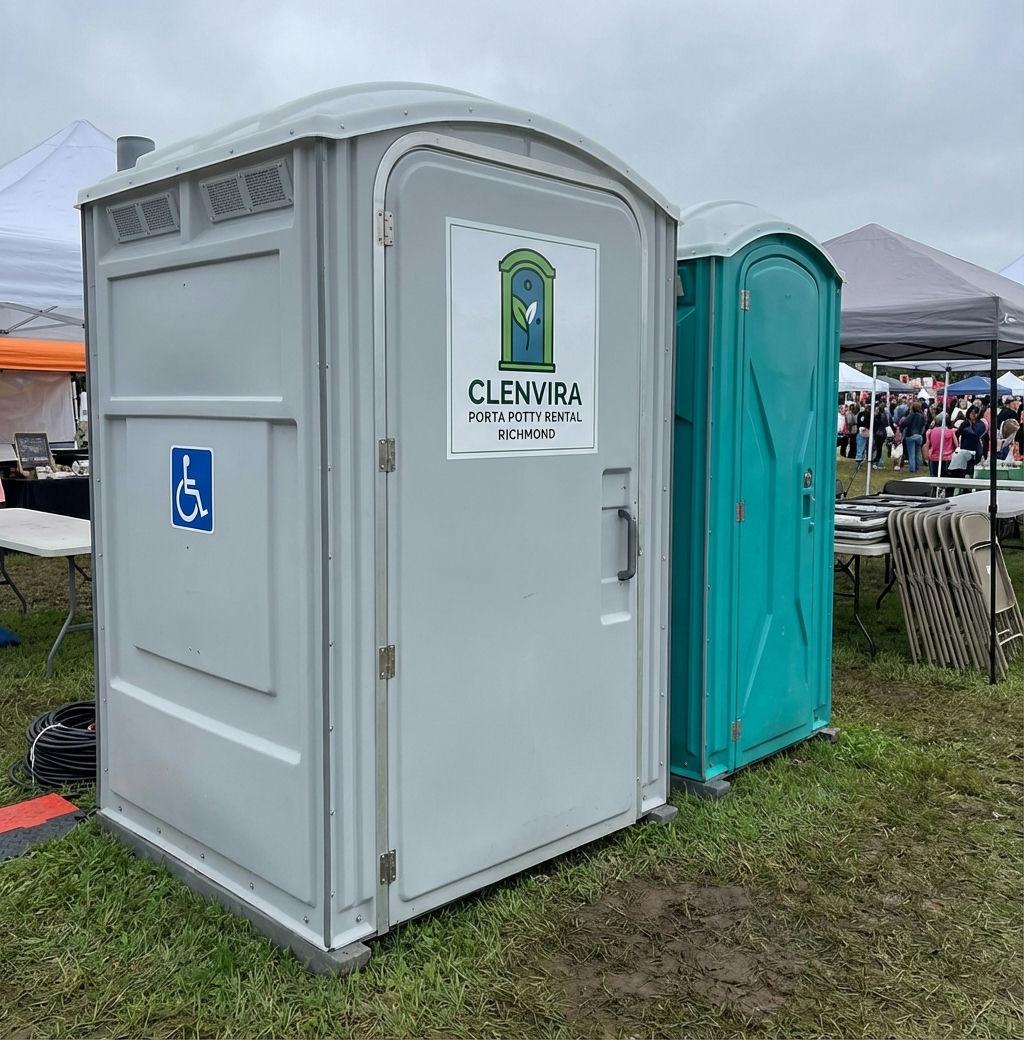
Ensuring restroom accessibility at your event isn't just good practice - it's essential for welcoming all guests. This guide explains what makes a porta potty ADA-compliant and how to include accessible units at your Richmond event.
What Makes a Porta Potty ADA Compliant?
ADA-compliant portable restrooms are specifically designed to accommodate wheelchair users and individuals with mobility impairments. Key features include:
- Larger interior space: Enough room for a wheelchair to enter and maneuver
- Wide door opening: Minimum 32 inches clear width for wheelchair access
- Grab bars: Sturdy handrails for support and stability
- Ramp access: Ground-level entry or ramp for wheelchair access
- Lower toilet height: Positioned for easier transfers from a wheelchair
- Non-slip flooring: Safe surface for all users
- Clear signage: International accessibility symbol clearly displayed
When Are ADA Units Required?
Requirements vary, but here's general guidance:
- Public events: Any event open to the public should include accessible restrooms
- Government-sponsored events: Required to have accessible facilities
- Events on public property: Parks, streets, and public venues typically require accessibility
- Events receiving public funding: Accessibility is generally required
- Private events: Not legally required but strongly recommended for guest comfort
Even when not strictly required, including ADA units demonstrates consideration for all guests and ensures everyone can comfortably attend your event.
How Many ADA Units Do You Need?
A good rule of thumb:
- Events under 250 people: At least 1 ADA unit
- Events 250-500 people: At least 2 ADA units
- Larger events: Approximately 5% of total units should be ADA-compliant
For events specifically targeting or expecting attendees with disabilities, consider increasing these numbers.
Placement Considerations for ADA Units
Proper placement is just as important as having ADA units available:
- Accessible path: Ensure a clear, firm, level route to the unit
- Surface conditions: Avoid gravel, grass, or uneven terrain if possible
- Level ground: Place on flat surfaces for safe ramp use
- Space in front: Allow adequate room for wheelchair approach
- Distribute throughout: Don't cluster all ADA units in one location
- Near main areas: Position convenient to main event activities
Beyond Wheelchair Users
ADA units benefit many people beyond those in wheelchairs:
- Elderly guests who need grab bars for stability
- Parents with strollers who need extra space
- People with temporary injuries using crutches or walkers
- Anyone who simply prefers more room
Many event organizers find that ADA units get significant use from a variety of guests who appreciate the extra space and amenities.
Can Anyone Use ADA Units?
Yes, ADA portable restrooms are available for anyone to use. Unlike designated accessible parking spaces, accessible restrooms don't require verification of disability. However, guests without mobility needs should consider leaving ADA units available when standard units are open, in case someone who needs the accessible features arrives.
← Back to Blog